Sabtu, 15 September 2018

PDF Ebook A Gathering of Old Men, by Ernest J. Gaines

PDF Ebook A Gathering of Old Men, by Ernest J. Gaines

Are you searching for A Gathering Of Old Men, By Ernest J. Gaines that ends up being an analysis source promptly? Currently we invite! We offer guide that you actually need now. This publication is exactly developed for inspiring lots of people that review it. If you truly should obtain the book earlier, you remain in the best pace. This website will not just offer guide in soft documents system directly. However, you could additionally take it directly as well as rapidly without investing some days to await or awaiting the times you have downtime.

A Gathering of Old Men, by Ernest J. Gaines

A Gathering of Old Men, by Ernest J. Gaines


A Gathering of Old Men, by Ernest J. Gaines


PDF Ebook A Gathering of Old Men, by Ernest J. Gaines

Presenting this publication in soft file kind is actually enjoyable. Yeah, this publication will certainly exist in various way, as just what you want to get now. Also this is a soft data; you can take pleasure in how guide will inspire you. By reading it, you could gain not only the inspiring book but also the representative most recent book collection. Well, just what is the book? A Gathering Of Old Men, By Ernest J. Gaines, as one of the most preferred books on the planet. So, you have to read it.

Feeling tired after doing some activities in holidays will buy you to have leisure for some moments. It will additionally help you to satisfy the charge time. When you could enjoy your time for leisure as well as forget the panorama around you, it is the most effective time to have likewise checking out. Yeah, reading publication ends up being a very best concept to do today. But, do are you feel odd not to bring certain book?

No, we will certainly share you some motivations about exactly how this A Gathering Of Old Men, By Ernest J. Gaines is referred. As one of the analysis publication, it's clear that this book will be absolutely done greatly. The related subject as you need currently comes to be the man aspect why you should take this publication. Additionally, getting this book as one of reading materials will enhance you to obtain more information. As recognized, more info you will obtain, extra updated you will certainly be.

It is so easy, right? Why don't you try it? In this site, you could also locate other titles of the A Gathering Of Old Men, By Ernest J. Gaines book collections that might have the ability to assist you discovering the most effective option of your task. Reading this book A Gathering Of Old Men, By Ernest J. Gaines in soft data will additionally ease you to obtain the source easily. You might not bring for those books to someplace you go. Just with the device that constantly be with your almost everywhere, you can read this publication A Gathering Of Old Men, By Ernest J. Gaines So, it will certainly be so quickly to complete reading this A Gathering Of Old Men, By Ernest J. Gaines

A Gathering of Old Men, by Ernest J. Gaines

Review

“Gaines knows how to tell a story. . . . [He writes] with humor, a strong sense of drama and a compassionate understanding of people who find themselves in opposing positions.” —Jonathan Yardley, Washington Post"Poignant, powerful, earthy . . . a novel of Southern racial confrontation in which a group of elderly black men band together against whites who seek vengeance for the murder of one of their own." —Booklist“Early in this eloquent novel . . . a sheriff is summoned to a sugarcane plantation, where he finds one young white woman, about eighteen old black men, and one dead Cajun farmer.  The sheriff is sure he knows who killed the Cajun—although each of the men is toting a shotgun only one of them could hit a barn door—but threats and slaps fail to change their stories.  Each one claims guilt, and all but one promise to provoke a riot at the courthouse if the sheriff tries to make an arrest.  In the meantime, they wait for a lynch mob that the dead man's father—like the son, a notorious brute—is sure to launch. . . . Before it is over, everyone involved has been surprised by something; the old black men not least of all, by their first taste of power and pride.” —The New Yorker“A fine novel . . . there is a denouement that will shock and move readers as much as it does the characters, and a multiplicity of themes that raises a simple tale to grand signfiicance.” —David Bradley, Philadelphia Inquirer

Read more

From the Inside Flap

isiana sugarcane plantation in the 1970s, A Gathering of Old Men is a powerful depiction of racial tensions arising over the death of a Cajun farmer at the hands of a black man. "Poignant, powerful, earthy...a novel of Southern racial confrontation in which a group of elderly black men band together against whites who seek vengeance for the murder of one of their own."--Booklist"A fine novel...there is a denouement that will shock and move readers as much as it does the characters."--Philadelphia Inquirer

Read more

See all Editorial Reviews

Product details

Paperback: 213 pages

Publisher: Vintage; Reissue edition (June 30, 1992)

Language: English

ISBN-10: 0679738908

ISBN-13: 978-0679738909

Product Dimensions:

5.2 x 0.6 x 8 inches

Shipping Weight: 7.2 ounces (View shipping rates and policies)

Average Customer Review:

4.4 out of 5 stars

115 customer reviews

Amazon Best Sellers Rank:

#54,466 in Books (See Top 100 in Books)

‘But I would like people to know that we aren’t who they think we are. They all expect us to ride tonight. They’re all waiting for that. I say let them wait. Let them wait and wait and wait.’Set in Louisiana in the 1970s, A Gathering of Old Men opens with one member of the community, Beau Boutan, having been shot and killed. There is an investigation into the how and whys of this murder that is revealed through various character perspectives, and, along with these perspectives we get a deeper sense of racial tensions that have consumed much of this community.I was really lukewarm about Gaines' A Lesson Before Dying, but really enjoyed A Gathering of Old Men. I thought it was a powerful book with a powerful message about racial conflict/injustice and Gaines writes in a very symbolic, poetic way. I really thought the varying character perspectives really enhanced the viewpoints. I also thought the characters were complex and very realistically developed given the circumstances of the plot.One of the key themes that drives the novel is the idea of change, or moving forward. Change can come in various forms. There are points where several of the characters focus on the idea that we need to move on from old ideas. We need change; we cannot simply follow blindly ideas of the past that out of accord with racial harmony. There is a disconnect in racial harmony; and, therefore many character take a stand, both literally and symbolically, against this disconnect, this disharmony.A powerful book with an important message about racism in the deep South.

This is a classic that I had never read. The novel is set in Louisiana in the 1970's, and it involves a white man being shot. A group of "old men" all claim they shot the white man so that no one man can be proven guilty. The incident is an opportunity for the old men to finally stand up against the white establishment that has oppressed them for their entire lives. A unique aspect of this book is that each chapter is narrated by a different character so the reader gains many perspectives as the plot develops.The book was required reading for my high schooler, which is what lead me to read this book. It is an excellent book, and I highly recommend it. The book leads to some excellent discussions on race relations, changes with new generations, and doing what is right regardless of the personal cost. My son had to write a paper comparing one of the minor characters, Russell, to Oskar Schindler.If you enjoyed To Kill a Mockingbird, you are likely to enjoy this book as well.

All Sheriff Mapes wanted to do on a fine October day was get in a little fishing. A call brings him to Marshall Quarters where he finds the dead body of a white farmer and a gathering of old black men with identical shotguns. All the men confess to the murder, each presenting a deeply personal motive based upon decades of inhumane treatment. Sheriff Mapes is but one of a score of memorable characters in A Gathering of Old Men by Ernest J. Gaines, a retired Writer-in-Residence at the University of Louisiana at Lafayette. Published in 1983, A Gathering of Old Men is a classic work of southern U.S. fiction where the 1920’s and the 1970’s collide.Another gathering of men ten miles away in Bayou Michel, a place where feelings about clan and tribe run deep, the family and friends of the murdered Beau Boutan, seek retribution. Luke Will and his posse may not be classic white trash but they’re not sipping mint juleps at Churchill Downs on Derby Day either. Leaving Bayou Michel, they will gather at Jacques Thibeaux’ combination grocery/liquor store to imbibe a little liquid courage before the denouement.Gaines inserts several tried and true southern archetypes into the narrative: Griffin, the obsequious deputy sheriff, Candy Marshall, an annoying white do-gooder, an ineffectual man of the cloth, Reverend Jameson and Gilbert “Salt” Boutan, the white star of a recently integrated LSU football team and the younger brother of the slain man.To read A Gathering of Old Men so soon after the 2016 election is a sobering reminder that old attitudes and old hurts linger and there is no shortage of deplorable white men eager to hunker down in Mrs. Clinton’s basket.

I think this is one of the best books I have read in years. It is an age old problem that I used to think was behind us, but lately I realize nothing has changed. This book is well written and as true today as the period of history it is supposed to represent.

In another amazing novel by Ernest Gaines, we witness and fall in love with the characters who come from the pages and wrap you up in their stories and in their strong arms.A GATHERING OF OLD MEN is a hilariously dramatic story of old men who share love, pride, anger and history. When Beau Boutan, a Cajun man, is found 'laying on his back in Mathu's yard', the old men gather... on both sides of the St. Charles River. Strong black men unite and share their stories. In Cajun country, William Fix Boutan and his old friends gather to mourn and make a decision.The tales are interestingly funny yet create provocative thought... not anger. "But they comes a day..."I highly recommend this novel and other novels by Ernest Gaines. Read and enjoy A GATHERING OF OLD MEN; experience the rich storytelling of the old men of the quarters as penned by a wonderful novelist.

Ernest Gaines is the best southern writer! Gifted, real, true to his roots and sense of place. This story grabs your heart and you never forget the beautiful characters it brings to life.

Everything arrived on time and as advertised.

Summer reading list at our high school. My daughter wasn't very excited she has to read it but I am always happy to find these books at great deals at Amazon

A Gathering of Old Men, by Ernest J. Gaines PDF
A Gathering of Old Men, by Ernest J. Gaines EPub
A Gathering of Old Men, by Ernest J. Gaines Doc
A Gathering of Old Men, by Ernest J. Gaines iBooks
A Gathering of Old Men, by Ernest J. Gaines rtf
A Gathering of Old Men, by Ernest J. Gaines Mobipocket
A Gathering of Old Men, by Ernest J. Gaines Kindle

A Gathering of Old Men, by Ernest J. Gaines PDF

A Gathering of Old Men, by Ernest J. Gaines PDF

A Gathering of Old Men, by Ernest J. Gaines PDF

Senin, 03 September 2018

Download PDF This Life: Secular Faith and Spiritual Freedom

Download PDF This Life: Secular Faith and Spiritual Freedom

When you feel that you're interested enough in this book, you can get it by clicking the link to attach straight to guide. This Life: Secular Faith And Spiritual Freedom is offered in the soft documents forms, so you can conserve and read it in various tool. We mean that it is suitable and available to review whenever you desire. Even it's in the train or every where you are, you could use the leisure for analysis.

This Life: Secular Faith and Spiritual Freedom

This Life: Secular Faith and Spiritual Freedom


This Life: Secular Faith and Spiritual Freedom


Download PDF This Life: Secular Faith and Spiritual Freedom

Required resources? From any type of the books? Try This Life: Secular Faith And Spiritual Freedom This publication can offer you the inspiration for resolving your duties? Getting brief target date? Are you still puzzled in getting the brand-new ideas? This book will be always offered for you. Yeah, of course, this schedule will certainly worry about the same topic of this publication. When you truly need the suggestions associated with this comparable subject, you could not have to be puzzled to seek for various other source.

Maintain your means to be here and read this web page finished. You could take pleasure in looking guide This Life: Secular Faith And Spiritual Freedom that you actually describe obtain. Below, getting the soft documents of guide This Life: Secular Faith And Spiritual Freedom can be done easily by downloading and install in the web link web page that we offer below. Certainly, the This Life: Secular Faith And Spiritual Freedom will be yours sooner. It's no need to wait for the book This Life: Secular Faith And Spiritual Freedom to receive some days later after buying. It's no need to go outside under the heats at middle day to visit the book establishment.

From the mix of understanding and actions, someone can improve their ability as well as ability. It will lead them to live and also work far better. This is why, the pupils, workers, or perhaps employers ought to have reading routine for publications. Any kind of publication This Life: Secular Faith And Spiritual Freedom will provide particular expertise to take all benefits. This is just what this This Life: Secular Faith And Spiritual Freedom tells you. It will include even more expertise of you to life and work better. This Life: Secular Faith And Spiritual Freedom, Try it and also prove it.

Now, when you need a new buddy to accompany you encountering as well as solving the obstacles, This Life: Secular Faith And Spiritual Freedom is the prospect to recommend. It could accompany you wherever you go advertisement you need. It's created for soft data, so you will certainly not feel tough to locate as well as open it. Juts open up the tab and then review it. This way can be done naturally after you are obtaining the records using this website. So, your work is by clicking the web link of that book to go to.

This Life: Secular Faith and Spiritual Freedom

Product details

#detail-bullets .content {

margin: 0.5em 0px 0em 25px !important;

}

Audible Audiobook

Listening Length: 16 hours and 44 minutes

Program Type: Audiobook

Version: Unabridged

Publisher: Random House Audio

Audible.com Release Date: March 5, 2019

Whispersync for Voice: Ready

Language: English, English

ASIN: B07NZ21D9N

Amazon Best Sellers Rank:

This Life: Secular Faith and Spiritual Freedom PDF
This Life: Secular Faith and Spiritual Freedom EPub
This Life: Secular Faith and Spiritual Freedom Doc
This Life: Secular Faith and Spiritual Freedom iBooks
This Life: Secular Faith and Spiritual Freedom rtf
This Life: Secular Faith and Spiritual Freedom Mobipocket
This Life: Secular Faith and Spiritual Freedom Kindle

This Life: Secular Faith and Spiritual Freedom PDF

This Life: Secular Faith and Spiritual Freedom PDF

This Life: Secular Faith and Spiritual Freedom PDF

Minggu, 22 Juli 2018

Free Download Laetitia Casta

Free Download Laetitia Casta

Reading this Laetitia Casta will certainly give you precious time to check out. Also this is just a publication, the idea offered is incredible. You can see how this book is offered making the better future. For you that actually don't like reading this book, don't bother. But, allow us to tell you something interesting from this book. If you intend to make better life, get this book. When you want to undertake an excellent life in the meantime as well as future, read this book.

Laetitia Casta

Laetitia Casta


Laetitia Casta


Free Download Laetitia Casta

Just what do you believe to conquer your problem needed now? Reading a book? Yes, we agree with you. Publication is among the real sources and entertainment sources that will be always found. Several book stores additionally use and also provide the collections books. Yet the stores that sell the books from other countries are unusual. Thus, we are below to help you. We have the book soft file links not only from the country yet likewise from outside.

Well, publication Laetitia Casta will certainly make you closer to what you are prepared. This Laetitia Casta will be constantly excellent pal at any time. You might not forcedly to constantly complete over reading a book in short time. It will be just when you have extra time as well as investing couple of time to make you really feel enjoyment with what you review. So, you could get the meaning of the message from each sentence in the book.

Own this book asap after completing read this web site page. By having this book, you can have time to spare to review it naturally. Also you will not have the ability to complete it in short time, this is your opportunity to transform your life to be better. So, why do not you save your time even sticks out few in a day? You can review it when you have extra time in your office, when being in a bus, when going to residence prior to resting, and also a lot more others.

After setting up the communication of you in order to favor such book, you can directly discover as well as get to download and install as well as make manage the Laetitia Casta The source can be obtained from link to give below. As one of the greatest publication internet site on the planet, we always give the best things. Naturally, the book that we offer constantly guide that provides extraordinary thing to find out and obtain. If you assume that you really require this publication currently, get it as soon as possible.

Laetitia Casta

Product details

Hardcover: 128 pages

Publisher: Studio; First Edition edition (September 1, 1999)

Language: English

ISBN-10: 0670888192

ISBN-13: 978-0670888191

Product Dimensions:

10 x 0.8 x 13.3 inches

Shipping Weight: 2.8 pounds (View shipping rates and policies)

Average Customer Review:

4.4 out of 5 stars

33 customer reviews

Amazon Best Sellers Rank:

#574,365 in Books (See Top 100 in Books)

I'm a huge fan of Laetitia Casta since the 90's. What I really love about this book the most is the amazing posing and captures of her at times she did not know the camera was there. The photographers in this book have inspired me for years. I'm also a photographer now for the last 10 years.Back when this book 1st came out in the 90's it was $120.00 So I waited. 5 years later it was still $100.00 So I waited some more. Now 19 years later I bought this book for $35+ dollars. So glad I waited. I flip through this book for inspiration for unforgettable poses that I plan to incorporate in my future photo shoots.

The last issue of the French edition of Photo did a very interesting juxtaposition: A pictorial featuring three pictorials of violence (the Indonesian genocide commited by Dayaks being particularly harrowing)...followed by a Laetitia Casta pictorial. After the grisly shots of the Dayaks and their victims, it was like a whole different world in the Casta pictorial -- one of the sweetest-looking faces in fashion.This book offers mostly photos available from other sources. With a clear approach targeting fans smitten with Laetitia's looks (marks for lack of pretension towards something more serious), this book is a nice overview of a supermodel who doesn't fall into the Cindy Crawford trap (too much pouting, zero sincerity -- the Crawford specialty). On the other hand, it has no guiding principle and no material that is not previously published.Laetitia's own charcoal scribbles and comments are highly charming (her comments on nudity and seduction, for example). The strongest photos in the book are those by the one who, I think, understands her appeal the most: Dominique Isserman, one of the first photographers to use Laetitia frequently for sessions.The book has a limited scope, obviously; it does get across Casta's strongest trait, which is the ability to convey a sense of herself as a flesh-and-blood person -- some kind of personal, emotional communication, instead of the empty glamour that most models project.

...was born the day before me. I have been stalking her ever since. Until the French High court judgment, but I was not there to defend myself.Anyway this book sincerely needed to be printed on glossy paper. Images lack pop. The darker midrange of the photos wash out. If the book had offered that, I would have bought two.Laetitia was one of the most flexible models, ever. 50s...90s...she comprised the whole range. It is worth the used price. It is worth the new price.

This book is very well done, would have liked to see more of her editorial work in there. She had plenty of space and maybe didn't need to put such big photos from only a few shoots. I sill recommend it as something to learn by on how a model should be handled. The agents aren't the only ones who matter although they think so. It's absolutely the girl as much as the agent. She's the one who has to do the job.

Laetitia Casta is, of course, a spectacularly beautiful and shapely model, and the photographers represented in the eponymous book are among the best and most fashionable in the world. Alas, the photos are vandalized by the worst reproduction and printing quality in a photo book in recent years. Previews of the book in "Photo" and other magazines carry greatly superior reproductions of the images which here are out of focus and muddy. "Forms", by Patrick Demarchelier, carries several of the same images and a comparison of the two books is utterly humiliating for the dreadful Laetitia. As for the color images -- well, only the mini poster glued to the back cover offers anything worth viewing. Don't buy the book without seeing it first, so you can be sure of what you are -- and are not -- getting.

a bit vintage but shows like a history lesson of Laetitia Casta.

In my opinion, the editorial direction could have been better. The book contains a handful of great images nevertheless.

If you are a true fan of Laetitia Casta, you will really like this book, despite what some naysayers say about the quality of paper and selection of photos - who cares, she's so darn beautiful, it's fine anyway - enjoy it! There are pictures of young Laetitia and her whole family and relatives. I like this page, it shows more of who she is. Go get it, it's well worth the money!

Laetitia Casta PDF
Laetitia Casta EPub
Laetitia Casta Doc
Laetitia Casta iBooks
Laetitia Casta rtf
Laetitia Casta Mobipocket
Laetitia Casta Kindle

Laetitia Casta PDF

Laetitia Casta PDF

Laetitia Casta PDF
Laetitia Casta PDF

Rabu, 27 Juni 2018

Free Download Sally's Phone

Free Download Sally's Phone

Sally's Phone When creating can change your life, when creating can improve you by supplying much cash, why don't you try it? Are you still really confused of where understanding? Do you still have no suggestion with exactly what you are visiting create? Now, you will need reading Sally's Phone A great author is an excellent viewers at once. You could define just how you create depending upon just what books to review. This Sally's Phone could aid you to solve the trouble. It can be one of the best resources to develop your creating skill.

Sally's Phone

Sally's Phone


Sally's Phone


Free Download Sally's Phone

Reviewing, exactly what do you consider this word? Is this word burdening you? With many works, duties, and tasks, are you compelled a lot to do this particular task? Well, even lots of people take into consideration that reading is sort of monotonous activity, it does not mean that you have to ignore it. In some cases, you will certainly need times to invest to check out the book. Even it's simply a book; it can be a really worthwhile and priceless thing to have.

One that currently becomes a speaking resource is Sally's Phone This is what you could feel when looking or reading the title of this publication. This book has successfully influence the readers from the many nations to obtain the impact. This is why it tends to be just one of the most preferred books to read recently. Will you be just one of them? It's relying on your choice to choose this book as yours or not.

For you that desire this Sally's Phone as one of your good friend, this is very extraordinary to find it. You could not require very long time to find just what this book offers. Getting the message straight when you read sentence by sentence, web page by web page, is kind of health. There may be only couple of people who can not get the messages got plainly from a book.

Based on the Sally's Phone specifics that our company offer, you could not be so baffled to be below as well as to be member. Obtain currently the soft file of this book Sally's Phone and also save it to be all yours. You saving could lead you to stimulate the simplicity of you in reading this book Sally's Phone Even this is forms of soft data. You could actually make better chance to obtain this Sally's Phone as the recommended book to review.

Sally's Phone

Product details

#detail-bullets .content {

margin: 0.5em 0px 0em 25px !important;

}

Audible Audiobook

Listening Length: 20 minutes

Program Type: Audiobook

Version: Abridged

Publisher: Oxford University Press

Audible.com Release Date: November 10, 2010

Language: English

ASIN: B004BRT8O2

Amazon Best Sellers Rank:

This is an extraordinary set of readers. It comprises over 200 titles, with 6 levels plus "starter".GOOD STORIESThe stories are as interesting as any I have seen, including books by Sandra Heyer (The True Stories series) and L A Hill (Elementary Stories for Reproduction).Audio FilesMost stories have an audio component, at an extra charge. Many are available from Audible.com on Amazon for $3.00. It is well worth it. The audio adds a lot to the story.3 FormatsThere are 3 kinds of reader:Narrative – mostly text, with some picturesComic Strip – many illustrations, with maybe ¼ the text of the narrative booksInteractive – students move from page to page depending on how they answer questions.There are also activities, tests, answers to tests, etc., which you can get free online.Aids in navigation.“The Oxford Bookworms Library Chart” lists most titles, and it gives level, genre, and useful notes.Oxford Bookworms Bestsellers is a list of bestsellers. Very useful when you are new to the series.Oxford Bookworms awards is hard to find, but useful.I am writing boilerplate that I will use for about 10 titles. I don’t have time to review each separately.The Girl with Green Eyes even has a moral!

The book "Sally's phone" by Christine Lindop tells the story of a girl who basically depends on her phone at home, on the train, at work, in coffee... On this day, Sally will meet her boyfriend and his boss, but she accidentally changes her phone with Paul's at the café, and from this on there will be unexpected changes in her day. It is a fun book to read, and beyond the increase of vocabulary it provides it makes you smile. Christine Lindop has written several other books, and through them aims to help young learners of English.

Well done, love those comprehension questions inserted throughout the text.

Sally's Phone PDF
Sally's Phone EPub
Sally's Phone Doc
Sally's Phone iBooks
Sally's Phone rtf
Sally's Phone Mobipocket
Sally's Phone Kindle

Sally's Phone PDF

Sally's Phone PDF

Sally's Phone PDF
Sally's Phone PDF

Rabu, 13 Juni 2018

Free Download , by K. Helmstetter

Free Download , by K. Helmstetter

Reading books will certainly not obligate you to complete it in a day. After your reading publication now, , By K. Helmstetter can be the picked book to be. We recommends due to the top quality of this publication. It includes something new and different. You might not need to assume considerably, however simply check out and also you will see why this book is much recommended.

, by K. Helmstetter

, by K. Helmstetter


, by K. Helmstetter


Free Download , by K. Helmstetter

Invest your time even for simply couple of minutes to read a book , By K. Helmstetter Reading an e-book will certainly never lower and squander your time to be ineffective. Reviewing, for some individuals end up being a requirement that is to do on a daily basis such as spending quality time for eating. Now, just what regarding you? Do you like to check out an e-book? Now, we will certainly reveal you a new e-book qualified , By K. Helmstetter that could be a new means to explore the understanding. When reading this book, you can get one point to constantly keep in mind in every reading time, also tip by step.

When having downtime, just what should you do? Only resting or seatsing in the house? Full your spare time by reading. Start from now, you time must be priceless. One to proffer that can be reviewing material; this is it , By K. Helmstetter This book is provided not only for being the material reading. You understand, from seeing the title and also the name of author, you should know just how the top quality of this publication. Even the writer as well as title are not the one that chooses the book excels or not, you could compare t with the experience and also understanding that the writer has.

Compared to other people, when a person constantly attempts to reserve the time for reading, it will provide finest. The outcome of you check out , By K. Helmstetter today will affect the day thought and future ideas. It suggests that whatever acquired from reading publication will certainly be long last time investment. You may not have to get experience in actual problem that will invest more cash, yet you can take the method of reading. You can likewise locate the real point by checking out book.

Those are a few of benefits reviewing , By K. Helmstetter When you have actually decided to get and review guide, you need to reserve the formulation and also get the freely to review until finished. This book tends to be a needed book to need some obligations and also activities. When other people are still stressed over the tasks and target date, you can feel much more relaxed since you have obtained guide perfectly.

, by K. Helmstetter

Product details

File Size: 8984 KB

Print Length: 116 pages

Simultaneous Device Usage: Unlimited

Publisher: Green Butterfly Press (September 27, 2018)

Publication Date: September 27, 2018

Sold by: Amazon Digital Services LLC

Language: English

ASIN: B07HRKLW6S

Text-to-Speech:

Enabled

P.when("jQuery", "a-popover", "ready").execute(function ($, popover) {

var $ttsPopover = $('#ttsPop');

popover.create($ttsPopover, {

"closeButton": "false",

"position": "triggerBottom",

"width": "256",

"popoverLabel": "Text-to-Speech Popover",

"closeButtonLabel": "Text-to-Speech Close Popover",

"content": '

' + "Text-to-Speech is available for the Kindle Fire HDX, Kindle Fire HD, Kindle Fire, Kindle Touch, Kindle Keyboard, Kindle (2nd generation), Kindle DX, Amazon Echo, Amazon Tap, and Echo Dot." + '
'

});

});

X-Ray:

Not Enabled

P.when("jQuery", "a-popover", "ready").execute(function ($, popover) {

var $xrayPopover = $('#xrayPop_EB3B87D6445011E998E7252A737694E9');

popover.create($xrayPopover, {

"closeButton": "false",

"position": "triggerBottom",

"width": "256",

"popoverLabel": "X-Ray Popover ",

"closeButtonLabel": "X-Ray Close Popover",

"content": '

' + "X-Ray is not available for this item" + '
',

});

});

Word Wise: Not Enabled

Lending: Not Enabled

Screen Reader:

Supported

P.when("jQuery", "a-popover", "ready").execute(function ($, popover) {

var $screenReaderPopover = $('#screenReaderPopover');

popover.create($screenReaderPopover, {

"position": "triggerBottom",

"width": "500",

"content": '

' + "The text of this e-book can be read by popular screen readers. Descriptive text for images (known as “ALT text”) can be read using the Kindle for PC app and on Fire OS devices if the publisher has included it. If this e-book contains other types of non-text content (for example, some charts and math equations), that content will not currently be read by screen readers. Learn more" + '
',

"popoverLabel": "The text of this e-book can be read by popular screen readers. Descriptive text for images (known as “ALT text”) can be read using the Kindle for PC app if the publisher has included it. If this e-book contains other types of non-text content (for example, some charts and math equations), that content will not currently be read by screen readers.",

"closeButtonLabel": "Screen Reader Close Popover"

});

});

Enhanced Typesetting:

Enabled

P.when("jQuery", "a-popover", "ready").execute(function ($, popover) {

var $typesettingPopover = $('#typesettingPopover');

popover.create($typesettingPopover, {

"position": "triggerBottom",

"width": "256",

"content": '

' + "Enhanced typesetting improvements offer faster reading with less eye strain and beautiful page layouts, even at larger font sizes. Learn More" + '
',

"popoverLabel": "Enhanced Typesetting Popover",

"closeButtonLabel": "Enhanced Typesetting Close Popover"

});

});

Amazon Best Sellers Rank:

#164,290 Paid in Kindle Store (See Top 100 Paid in Kindle Store)

This book was exactly what I needed! For some time now I've been wanting to incorporate Turmeric into our diet, but didn't have any good recipes to use. I was delighted to run across this book and happy that I bought it!

Healthy recipe options.

Liked it

, by K. Helmstetter PDF
, by K. Helmstetter EPub
, by K. Helmstetter Doc
, by K. Helmstetter iBooks
, by K. Helmstetter rtf
, by K. Helmstetter Mobipocket
, by K. Helmstetter Kindle

, by K. Helmstetter PDF

, by K. Helmstetter PDF

, by K. Helmstetter PDF

Selasa, 12 Juni 2018

Free Ebook Is Administrative Law Unlawful?

Free Ebook Is Administrative Law Unlawful?

However, this age additionally enable you to obtain the book from many sources. The off line book shop might be an usual area to visit to obtain guide. Now, you can likewise find it in the online collection. This site is one of the on-line library where you can find your chosen one to read. Currently, today Is Administrative Law Unlawful? is a publication that you could locate here. This publication has the tendency to be the book that will certainly give you brand-new ideas.
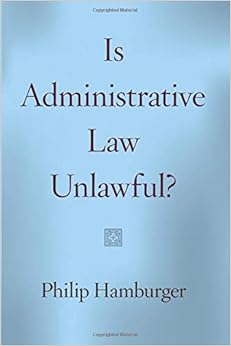
Is Administrative Law Unlawful?

Is Administrative Law Unlawful?


Is Administrative Law Unlawful?


Free Ebook Is Administrative Law Unlawful?

Use the innovative technology that human develops today to discover the book Is Administrative Law Unlawful? quickly. But first, we will ask you, how much do you love to check out a book Is Administrative Law Unlawful? Does it always up until finish? Wherefore does that book review? Well, if you actually like reading, aim to check out the Is Administrative Law Unlawful? as one of your reading collection. If you just checked out the book based on need at the time as well as incomplete, you should attempt to like reading Is Administrative Law Unlawful? initially.

Reviewing will certainly not provide you several things. However, reading will certainly provide what you require. Every book has certain subject as well as lesson to take. It will make everyone wish to select what book they will certainly read. It makes the lesson to take will actually associate with exactly how the individual requires. In this instance, the existence of this web site will truly assist readers to locate numerous publications. So, in fact, there is not only the Is Administrative Law Unlawful?, there are still great deals of type of guides to accumulate.

Quantities of guide collections that we offer in the lists in this internet sites are really numerous. Numerous titles, from variant subjects as well as themes are created by versions authors. Additionally, they are also released from different publishers worldwide. So, you might not just locate Is Administrative Law Unlawful? in this website. Several many books can be your forever pals begin with currently.

When you need also the various other book genre or title, discover guide in this website. One to keep in mind, we do not just provide Is Administrative Law Unlawful? for you, we additionally have several great deals of guides from several collections the whole globe. Think of, how can you obtain guide from other nation conveniently? Simply be here. Just from this site you could discover this condition. So, just join with us now.

Is Administrative Law Unlawful?

Review

“Is Administrative Law Unlawful? is a work of the very highest quality, a learned scholarly exegesis setting out the intellectual foundations—in medieval and early modern English constitutional thought—for the proposition that the contemporary American administrative state is profoundly unconstitutional and unlawful. Philip Hamburger’s argument is intricately wrought and forcefully expressed. Its indictment of modern administration in America doubles as a major statement on the virtues of a genuinely constitutional government.” (Ken I. Kersch, Boston College)"With characteristic erudition, Philip Hamburger shows how virtually every aspect of the modern administrative state undermines the Anglo-American legal tradition―or at least that part of the tradition that most informed the American founding. It is a provocative thesis, but one that is amply supported by extensive scholarly argument and fascinating historical study. Hamburger makes an impressive case that modern administrative law owes its lineage to claims of monarchical prerogative and civil law absolutism that were precisely the ideas that the American revolution was trying to reject. This is a tremendously important book." (Gary S. Lawson, Boston University School of Law)“An important new book that is very much worth reading." (National Review, Bench Memos 2014-05-29)"The most important book I have read in a long time." (Scott Johnson Power Line)“The administrative state is a modern invention. It was, and remains, a necessity in our complex modern age. Or so goes the argument. . . . Hamburger meticulously (and sometimes laboriously) demonstrates how the modern administrative state revives all the attributes of the royal prerogative and absolute power.” (Ilan Wurman Weekly Standard 2014-07-21)“A serious work of legal scholarship. . . . This is a book that rewards the reader with a deepened understanding of the Constitution and the challenges that confront us in the task of restoration. . . . The news of the day repeatedly buttresses the powerful case Hamburger makes against the legitimacy of the vast administrative apparatus that does so much to dictate the way we live now. It is a book not only of this season but of many seasons to come.” (National Review)“An interesting new work by Philip Hamburger dispenses with the tiresome back and forth between Republicans and Democrats. Instead, it focuses on Washington’s permanent administration―the ever-expanding federal bureaucracies that have come to play a central role in health care, finance, housing and work, and large roles in education, energy and whatever else constitutes the American system. . . . Hamburger’s book is filled with details of how the centralisation of power divorced from a popular or court mandate leads to insularity and even insurrection as hopes of efficiency and expertise give way to bureaucratic inertia.” (Economist 2014-08-09)“[Is Administrative Law Unlawful?] is the author’s most ambitious, even daring, work, for not only does it question important features of administrative law; it challenges (as the title suggests) their very legality. . . . Deeply researched and well written, the book is a veritable cornucopia of fresh and significant insights that will greatly enrich the existing literature. It is a work of encyclopedic breadth and erudition, confirming that its author is equally comfortable with grand themes and matters of granular detail.” (Claremont Review of Books 2014-11-20)“Hamburger argues persuasively that America has overlaid its constitutional system with a form of governance that is both alien and dangerous. . . . Some readers undoubtedly will find daunting this book’s length. . . . But it is lucidly written and carefully organized, and certainly it is no small task to analyze just how deeply the administrative state threatens liberty and constitutionalism. Scholars will return to Hamburger’s exhaustive explication of these issues for a long time to come.” (Law and Politics Book Review 2015-04-06)“Immensely important. . . . Hamburger indicts the entire structure of executive-agency rulemaking as illegitimate. . . . An argument of deep passion, learning, intelligence, and consequence that deserves to reach the widest possible audience.” (City Journal 2015-04-21)

Read more

About the Author

Philip Hamburger is the Maurice and Hilda Friedman Professor of Law at Columbia Law School. He is the author of The Administrative Threat, Is Administrative Law Unlawful?, Law and Judicial Duty, and Separation of Church and State.  

Read more

Product details

Paperback: 646 pages

Publisher: University of Chicago Press; Reprint edition (December 8, 2015)

Language: English

ISBN-10: 022632463X

ISBN-13: 978-0226324630

Product Dimensions:

6 x 1.6 x 9 inches

Shipping Weight: 12.6 ounces (View shipping rates and policies)

Average Customer Review:

4.5 out of 5 stars

38 customer reviews

Amazon Best Sellers Rank:

#525,268 in Books (See Top 100 in Books)

This book is one of the most important books anyone could read to understand what has happened to our real judicial system. Administrative Law has infiltrated our entire American System and it really is a problem. If you need to understand why it is so hard to get real justice when it involves government agencies and why there is so much red tape, this is a book you must read. This will help the average American or experienced Attorneys understand how we got to where we are. You will never regret reading this book!

This book offers a radical criticism of administrative law in the US, principally as to adjudication within admin agencies, but also as to the deferential stance frequently taken in judicial review and even extending to the development of rules by agencies, anything that is treated as "legally binding" on citizens without specific legislative enactment and de novo trial by an Article III court. The argument is principally historical, and draws heavily on 16th and 17th century English history and colonial American structures of government, The argument is not only extensive but scrupulous, observing, as an example of the latter, that the Article I of the Constitution begins with the words "All legislative Powers herein granted shall be vested in a Congress of the United States ..." and questioning how any other arm of the government could enact a rule that bound citizens in light of the word "All" at the start of the Article..That case is made powerfully and frankly is hard to refute. Unfortunately, the author doesn't spend as much time considering 20th century and 21st century matters as he does history. He tends to argue the same abstractions over and over, which is intellectually coherent, just a little tiring after a while. The book would have been even more compelling, and the reader better served, had he, either on his own or in conjunction with someone of a more journalistic bent, inserted modern day case studies involving real people who experienced real negative consequences from administrative actions. They would have broken up the repetition of abstractions and tied the argument more tightly to the practical outcomes of living in a bureaucratic state.

Administrative law—the delegation by the legislature of legislative and judicial power to the executive—is the backdrop of every American life, but very few people realize this. Fewer still realize that this backdrop is less like a fine wallcovering, an aesthetically pleasing but minor element, and more like a sticky web that, not seen until it’s too late, entraps prey prior to its being devoured. To remedy this lack of knowledge, Phillip Hamburger has written this outstanding book, which explains how we got here, where we are, and why that is bad.This is a very dense book—clear, but dense. While a non-lawyer could read it profitably, my guess is that he would find it difficult to follow, and would struggle with some concepts that Hamburger assumes the reader knows. These include items such as the historical difference between courts of law and courts of equity, the difference between common law and civil law, and the Constitution’s “necessary and proper” clause. Moreover, Hamburger generally assumes the reader understands the mechanics of today’s administrative law. I don’t think Hamburger could have written differently without making the book far too long, but it is unfortunate, because given left-wing dominance of the legal academy and profession, most of the author’s wisdom and insight will be like casting seed on barren ground. If you are a legal positivist, and believe in using the law to achieve so-called social justice, you do not care whether administrative law is unlawful, or, for that matter, about the law at all—you only care about desired results, and you will snicker at this book. Such people only understand power, and care nothing for the history and reasoning in this book, which focuses on what is lawful in the American system as it was set up and originally understood.This means the core audience for this book is a small group of open-minded people with legal training, as well as those already opposed to the current tyrannical structure of administrative law. Presumably the author hopes that his book will offer intellectual ammunition to this intellectual elite in the wars to come. And perhaps this small audience is all that matters. With the possible shift in American power in November 2016, and the possible rescue of the Supreme Court from legal positivist dominance, if Hamburger’s book only convinces and reinforces a small group of key academics and judges, it may ultimately have significant influence that cannot be directly perceived.I’ve been aware of the general parameters of administrative law for a long time (I even took a class in administrative law from Cass Sunstein, one of the modern giants of administrative law and recent head of OIRA), and while I’ve always been vaguely aware of certain major problems it creates for modern America, it is only recently that I have realized that administrative law is perhaps the central governance problem of our time. The creation of the “administrative state,” which really governs America and is both detached from and in opposition to democratic government, accountability, and the opinions of most of America, has greatly changed how our government works, or rather changed it from “our government” to “our governors.” But few realize or understand this, so into this knowledge gap has stepped Hamburger, out to prove that administrative law is “unlawful”—that is, it is incompatible with the deep structures of American law, and therefore it should be curbed, or, preferably, destroyed.Much of this book is a history book, where the history is continuously tied to elements of the author’s thesis. The key premise of the author is that, contrary to general perception, administrative law is not new, nor is it a response to modern conditions. Instead, it is a “repeated phenomenon”—a rebirth of the prerogative power claimed again and again by English monarchs, with varying degrees of success, until the execution of Charles I destroyed any such claim, and English common law clearly and permanently rejected prerogative law and established the supremacy of Parliament.Prerogative law was “absolute power,” but that did not imply a negation of law, rather it implied “an alternative mechanism for exercising control.” The principles underlying this rejection of prerogative law were deliberately and openly imported into American law, both on the state and federal levels. Colonial Americans, and those following for more than a hundred years, made repeated, explicit references to the need to avoid monarchical prerogative rule, law that was outside of and above legislative law, and to ensure that power was divided and specialized, to prevent the resurgence of this alternate mechanism of political control. Hamburger’s key thesis is that despite these efforts to structurally prevent the resurgence of prerogative rule, we have functionally returned to the days of Henry VIII, with the executive administrative state largely assuming the role of the monarch.Hamburger begins by introducing his conceptual framework. For Hamburger, the key power is the power to constrain or bind the public (or, in Hamburger’s term, “subjects”—meaning those subject to the law, not used in a polemical sense). This power in the American framework was, until modern times, always confined to the legislature and the judiciary, with only the legislature having any role in creating new methods of binding. The role of the executive was solely to implement the administration of such binding edicts, including decisions such as who receives certain benefits—but never, except with respect to a very narrow set of questions involving borders and related affairs, to constrain or bind the public on its own initiative.From this beginning, Hamburger attacks, in lengthy separate sections, administrative law as being extralegal legislation (that is, outside of law); extralegal adjudication; supralegal (that is, above the law) by virtue of being incorrectly deferred to by the judiciary; and consolidated (that is, eroding the key American legal structures of separation of powers and specialization of functions in the branches of government). Hamburger’s organizational structure is clear and coherent, and he follows it strictly, referencing topics belonging to other sections where necessary for explication or clarity.Hamburger begins with analyzing administrative law as extralegal legislation. As with monarchical prerogative legislation, the entire point of administrative law is to evade the regular structures and processes of lawmaking. Sometimes, then and now, such evasion was authorized by the legislature, and justified “in terms of interpretation, judicial deference, and ultimately necessity.” Whether or not so authorized, Hamburger argues that the entire American system was designed precisely to absolutely prohibit such extralegal governance, instead requiring law, actions that bound or constrained subjects, to be created only by the legislature, which was forbidden from any delegation of its powers.In his analysis, Hamburger first steps back to the 1539 Act of Proclamations, where Henry VIII most clearly demanded prerogative power, an Act repealed promptly upon Henry’s death. Hamburger traces this conflict through many subsequent interactions of king and Parliament, including judicial support and opposition, the development of the infamous Star Chamber as a vehicle for prerogative law, and the ultimate imposition of Parliamentary/constitutional supremacy in 1688. Hamburger notes various forms of prerogative rule beyond simple proclamations, including interpretations, regulations, and taxes. He traces how these were curbed by English common law, including through a rejection of claims of necessity (which, of course, was always imminent and yet also permanent—shades of today’s national security state). He expands the discussion to cover the suspending and dispensing powers claimed by English monarchs, which were rather the inverse of the power to bind, and notes (weaving the present into his narrative) how the modern administrative state similarly presumes to waive compliance with both statutory and regulatory law, despite the ultimate total English rejection of any such power outside of direct Parliamentary action, as well as its explicit rejection in American state and federal constitutional law. Finally, Hamburger itemizes the various ways in which regulations are made, primarily under the 1946 Administrative Procedure Act, ranging from formal rulemaking to the “guidance” so perniciously and so widely used by the Obama administration to evade the requirements of formal rulemaking. He also returns his focus to the modern use of waivers from regulations, which are, of course, merely the rejected executive suspending and dispensing powers rearing their heads again (he makes the distinction that while the legislature has the power to suspend the operation of a law as a whole, the very dangerous power to waive requirements, or dispense, in particular situations is not even granted to the legislature by the Constitution, and neither power can ever exist in the executive, within the framework of the Constitution). In sum, the modern administrative state has gotten everything the old English kings wanted, in that it governs wholly by the extralegal prerogative law utterly rejected by the framers of the American systems.Hamburger then turns to extralegal adjudication, which buttresses extralegal legislation. “To enforce a system of extralegal power in a system of law, rulers must work through extralegal adjudication. The prerogative regime therefore relied on its prerogative courts, and these days the administrative regime relies on its administrative tribunals.” And those administrative tribunals, though they exercise near-plenary judicial power, lack all the traditional characteristics of judges and limitations on judicial power. They lack juries, both grand and petit, in all cases, even though effectively their inquiries and penalties are often criminal in nature. They engage in open-ended inquiries on their own initiative. They have inquisitorial power and powers to compel self-incrimination totally lacking in real courts, and they shift the burden of proof to the accused. They rarely or never permit knowledge of or cross-examination of accusers. They operate in secret without even any publication of proceedings or decisions (Hamburger quotes Coke on the danger of doing justice in “chambers, or other private places,” and that due process of law can only occur “openly in the king’s courts, whither all persons may resort.”). They effectively issue writs of assistance and general warrants. They illegitimately sub-delegate already illegitimately delegated judicial power. They do not exercise independent judgment, but rather implement the rules and desires of those who hire and pay them, and who made the regulations they are judging. And in the exercise of implementing that will, they extort and turn to under-the-table threats to encourage cooperation, frequently in order “to secure substantive constraints not authorized by a statute.” We see this today in CERCLA, OSHA, and most of the activities of the Department of Education, whose employees should all be fired yesterday. And, as Hamburger extensively documents, none of these problems are new. They are the exact same problems that occurred under prerogative rule by the English kings, and the solution was to forbid both exercises of prerogative power, both in its legislative and in its supporting judicial form.In his third section, Hamburger turns to how the administrative state is not only outside the law, but above the law, as shown by the deference of the real judiciary to the administrative state’s abuses of the law, abuses that would not be countenanced by any other actor because of their extralegal nature. Again, Hamburger shows how this parallels the historical arc of prerogative law, in particular under James I, who most explicitly demanded not only the prerogative power outside regular law, but that his power not be reviewable by the courts, and therefore placed extreme pressure on the courts to defer to his own analysis of what was legal. In response, English judges asserted the supremacy of law, and these concepts were enshrined in the American systems—until wholly eroded by the administrative state. Nor does the right of appeal to the real judiciary cure these problems. In all actions, the real judiciary almost always “defers” both to the facts found by the executive administrative agency, to its interpretation of its own regulation, and, bizarrely, to its interpretation of the underlying legislative acts pursuant to which regulations are enacted.In the book’s fourth section, Hamburger addresses consolidated power. This is a more difficult concept; Hamburger uses the term “consolidated power” to mean a form of absolutism, analogous to medieval concepts of all power arising and flowing from the monarch. In reaction, America (and much of the West) over the centuries adopted specialized, divided power systems, reflecting the fragmented nature of modern life and reacting to the dangers of consolidated power. These divided power systems are generally regarded, with good reason, as the structural foundations of our freedoms. Administrative law restores the old vision while pretending to maintain the new.Hamburger analyzes consolidated power as unspecialized, undivided and unrepresentative. As to unspecialized and undivided, he means it eliminates the requirement for separation of branches and destroys the separation of powers. Unified powers were viewed with something between distaste and horror by republican thinkers, both American and foreign, at the time of the creation of the American systems. At the time, the negative example often offered was the despotic rule of the Ottoman Sultan; Hamburger also offers the interesting historical analogy of the Rump Parliament. Unified power destroys the slower deliberation, negotiation, and compromise built by choice into a divided system. It allows the government to create multiple avenues to achieve a desired goal, most of them extralegal. Furthermore, unified power necessarily means conflicts of interest, particularly among the fake judiciary of the administrative agencies, where ideological commitment and lack of independence preclude any type of neutral judgment. Accountability is not a cure; even if the administrative state were accountable to the people (which it is not), concentrations of power were and should be viewed as inherently pernicious, among other reasons because subjects can be better forced to comply with extralegal demands by an arm of government that can substitute one power for another, such as “by threatening prosecutions to get compliance with irregular legislation done through mere guidance.” Hamburger might also have used the example of the Obama administration extorting billions of dollars of settlements from banks supposedly responsible for the 2008 financial crisis, with hundreds of millions of those dollars being required to be paid to extremist, gangster-like pressure groups with which Obama was aligned and which were operated by cronies of his administration.As to unrepresentative, Hamburger quotes Elena Kagan on the notice-and-comment process being a “charade.” Nobody really thinks that administrative law has anything to do with democracy; it is a tool of the elite, who know better, and know they know better, to impose their will in order to avoid the democratic process. Or, as Obama put it, “I have a phone and a pen”—that is, he does not need to actually involve the people’s representatives to impose his superior will. Nor are administrative agencies ever made representative by being accountable. None are ever punished for any action, even crimes, even by losing their jobs. Witness the promotion, not demotion, of top IRS officials who actively attempted to suppress conservative votes by criminally persecuting conservative not-for-profits—although Hamburger, who is strictly non-partisan in his presentation, does not mention this or other inflammatory episodes, or any modern politician at all.Hamburger turns to an examination of the Continental, civil law (or “civilian”) roots of modern American administrative law, with a focus on the famous Prussian scholarship and system of administrative law, the Rechtsstaat, which systematized prerogative law in an attempt to control it, while simultaneously legitimizing it and recognizing a theoretically unified will of the state and people—the opposite of the route taken in England. He adds this section as background for the historical roots of American Progressive thought, of Woodrow Wilson and others, showing that they did not create the American administrative state as a deliberate attempt to restore English prerogative law, but rather in order import new, sophisticated, fashionable concepts from the Continent. The effect, though, was the same—the creation of a new, unlawful form of governance.Hamburger closes by examining various arguments as to why the administrative state should not be dismantled forthwith. All are found wholly wanting. The administrative state is unlawful; moreover, its continued soft despotism will ultimately encourage bad things: “Absolute power is dangerous in all societies, but in a free society, it is dangerous not only because of what it imposes but also because of what it is apt to provoke.” Perhaps the administrative state should be dismantled slowly, rather than quickly, transferring any necessary exercises of power directly to Congress and the judiciary. Perhaps lower court judges should begin aggressively criticizing the administrative state, while remaining bound by higher court decisions. Perhaps some other political action is necessary—specific recommendations are really not what Hamburger offers. Instead, he offers the intellectual reasoning to support political action.Other than simply dismantling the administrative state, I think there are some other actions that might be helpful. My personal favorite, on which Hamburger touches, is to return to a system where any executive agent of the government can be sued personally. This liability used to be universal in America, until as part of the expansion of the administrative state such suits were functionally eliminated. As Hamburger notes, “While suits were still possible against executive officers, they tended to lean toward the safety of lawful conduct—indeed, they tended to confine themselves to what was clearly within the law.” The current system of effective total immunity for all government agents, in particular all agents of the administrative state, makes officials acting on behalf of the executive a privileged class, immune “from the tort and property laws that apply to other Americans.”Therefore, immunity for all members of the executive branch should be abolished (including for administrative law “judges”), except perhaps for prosecutors, and there immunity should still be sharply limited. Ending immunity would go a long way to ending the abuses of the administrative state, even if the actual structure of the administrative state remained. Nor should any type of indemnification or defense by the government of its employees be available; such lawsuits should be required to be defended by the government agent personally with his own money, or with insurance bought by him from a private source. To prevent abusive lawsuits, the English Rule (fee-shifting to the prevailing party) should simultaneously be instituted. When I’m President, I’m going to do this as my first act! That’ll really make America great again—or at least help.Hamburger’s book has occasioned various academic responses, most or all of which I’ve read, including those by Adrian Vermeule (and Hamburger’s response to Vermeule, which does a very nice job summarizing Hamburger’s book). Vermeule’s main complaint, along with a good deal of meandering, is that “unlawful” is not adequately defined. But it is entirely obvious to a reader of this book that “unlawful” means not merely against statute or constitutional law, but corrosive of the rule of law itself, and of our republican system. The administrative state “abandons rule through and under the law.” Anyway, there is no room here to discuss the back-and-forth of legal academics in response to this book, but the responses are worth reading, because they all reinforce that Hamburger is correct in his analysis and his conclusions.Finally, I note that there are many possible avenues of attack on our current structure of administrative law, and Hamburger does not presume to cover them all, though he touches on many and some of his arguments could easily apply to non-legal attacks on administrative law. One could attack it on instrumentalist grounds—that is produces bad results, or empowers bad people. Or that is a tool of elite social control. Or, like Hayek, as a fool’s errand, for what Hamburger calls “epistemological arrogance.” But those are arguments for another day, and other books. This argument, on this day, sweeps the field.

I find this book one of the most interesting, compelling, and thought provoking books I have ever read. It is beautifully researched and the historical trail over hundreds of years of English political history and its relationship to the US Constitution is superb. Beyond that, the author's analysis of the development of the Administrative State in America from the late 1800s until today, and its hugely damaging effects on our Nation and our Liberties is startling clear. Despite the books legal basis, I find it very readable and enjoyable. As someone who believes in Limited Government, I have always been aware of the threat the Administrative State poses; however, I never had the knowledge or tools to develop a strategy to combat it. This book give me that - it is book everyone committed to Individual Rights and Freedom should read -- probably two or three times.My thanks to Philip Hamburger for his outstanding effort and his book's contribution to preserving Liberty in these United States of America.

This is a first rate discussion. It is not an novel but I had a hard time putting it down for supper (a very good supper). Those interested in the duties of congress, the background of those duties as entered in the constitution and the problem of the regulatory state will find this book extremely interesting. This is not a rant. It is a thoughtful discussion and very informative.

Is Administrative Law Unlawful? PDF
Is Administrative Law Unlawful? EPub
Is Administrative Law Unlawful? Doc
Is Administrative Law Unlawful? iBooks
Is Administrative Law Unlawful? rtf
Is Administrative Law Unlawful? Mobipocket
Is Administrative Law Unlawful? Kindle

Is Administrative Law Unlawful? PDF

Is Administrative Law Unlawful? PDF

Is Administrative Law Unlawful? PDF

Jumat, 04 Mei 2018

Free PDF The State, Antisemitism, and Collaboration in the Holocaust: The Borderlands of Romania and the Soviet Union

Free PDF The State, Antisemitism, and Collaboration in the Holocaust: The Borderlands of Romania and the Soviet Union

You could swiftly finish them to visit the web page and afterwards delight in obtaining guide. Having the soft data of this book is also good enough. By in this manner, you may not have to bring the book anywhere. You could conserve in some compatible gadgets. When you have actually made a decision to start reading The State, Antisemitism, And Collaboration In The Holocaust: The Borderlands Of Romania And The Soviet Union again, you can begin it almost everywhere and also every time when well done.

The State, Antisemitism, and Collaboration in the Holocaust: The Borderlands of Romania and the Soviet Union

The State, Antisemitism, and Collaboration in the Holocaust: The Borderlands of Romania and the Soviet Union


The State, Antisemitism, and Collaboration in the Holocaust: The Borderlands of Romania and the Soviet Union


Free PDF The State, Antisemitism, and Collaboration in the Holocaust: The Borderlands of Romania and the Soviet Union

The State, Antisemitism, And Collaboration In The Holocaust: The Borderlands Of Romania And The Soviet Union. Let's check out! We will certainly commonly discover this sentence anywhere. When still being a childrens, mom made use of to get us to constantly check out, so did the teacher. Some books The State, Antisemitism, And Collaboration In The Holocaust: The Borderlands Of Romania And The Soviet Union are completely checked out in a week and we need the responsibility to assist reading The State, Antisemitism, And Collaboration In The Holocaust: The Borderlands Of Romania And The Soviet Union What about now? Do you still enjoy reading? Is reviewing just for you that have obligation? Not! We below provide you a brand-new book qualified The State, Antisemitism, And Collaboration In The Holocaust: The Borderlands Of Romania And The Soviet Union to review.

Well, in regard to this trouble, what sort of book do you require now? This The State, Antisemitism, And Collaboration In The Holocaust: The Borderlands Of Romania And The Soviet Union It's really wow! We are additionally coming with the collection of this book soft documents below. It is not example by chance. This is the outcome of your initiative to constantly follow exactly what we offer. By finding the book in this website it verifies that we always give the books that you really require a lot.

One that makes this publication is highly checked out by amounts people is that it offers a various method to utter the significance of this book for the visitor. Easy to read and also easy to understand turn into one part personalities that people will take into consideration in picking a book. So, it is extremely appropriate to think about The State, Antisemitism, And Collaboration In The Holocaust: The Borderlands Of Romania And The Soviet Union as your reading material.

Now, when you require a brand-new buddy to accompany you dealing with as well as addressing the challenges, The State, Antisemitism, And Collaboration In The Holocaust: The Borderlands Of Romania And The Soviet Union is the prospect to suggest. It can accompany you anywhere you go advertisement you require. It's designed for soft file, so you will not feel difficult to discover and also open it. Juts open the tab and after that review it. By doing this can be done obviously after you are obtaining the files through this website. So, your job is by clicking the web link of that book to go to.

The State, Antisemitism, and Collaboration in the Holocaust: The Borderlands of Romania and the Soviet Union

Review

"Can states school their citizens for genocide? Does valuing cultural diversity, by contrast, create a lasting buffer against state-organized violence? Diana Dumitru's thesis is provocative: that the Soviet ideology of "friendship of peoples" attenuated popular antisemitism. Using the Romanian-Soviet borderland as a kind of natural experiment, Dumitru finds substantial differences between how neighboring populations in Romania and the USSR viewed their Jewish neighbors. Dumitru's work will open new debates about the power of political choice in determining the course of the Holocaust in different lands." Charles King, author of Odessa: Genius and Death in a City of Dreams"Diana Dumitriu's history shows the incredible power of the state's rhetoric and regulations to shape the attitudes and beliefs of its citizenry. This is a shocking and essential story for scholars of Central and Eastern Europe." Kate Brown, author of A Biography of No Place: From Ethnic Borderland to Soviet Heartland"'The Holocaust in Bessarabia and Transnistria is much less familiar than that in Poland and the Baltic states, while by many accounts it was just as bestial. Diana Dumitru's research explores an even less familiar reality: that Stalin's totalitarianism fostered a climate that was relatively benevolent toward the Jews by comparison with the hostility fostered by the more traditional authoritarianism of Romania. In bringing to the surface this apparent irony, she demonstrates how the Holocaust remains an inexhaustible field of study, which continues to shed a revealing and troubling light on our present." Robert D. Kaplan, author of Balkan Ghosts: A Journey through History"Diana Dumitru's important contribution to the burgeoning study of the Holocaust in the East demonstrates convincingly that Transnistrian Moldova, under Soviet rule from 1918 to 1940, witnessed far less collaboration than did Bessarabian Moldova, under Romanian rule. Her argument that Soviet internationalism explains this difference is an important challenge to both Holocaust studies and Soviet history." Terry Martin, author of Affirmative Action Empire: Nations and Nationalism in the Soviet Union, 1923‒1939'A fascinating study of the ordinary civilians who chose to victimize Jews or to help them during the perilous times of Nazi occupation. It represents a major contribution to this understudied topic outside the realm of direct Nazi rule. The entire book would fit greatly into Holocaust studies and East European history classes, and should not be omitted from the reading list of scholars of Romanian and Ukrainian history.' Ștefan Cristian Ionescu, H-Nationalism'This admirable work of scholarship is notable for its substantiation of a view that in Soviet-ruled areas of Eastern Europe during the interwar period, the civilian population was less prone to antisemitism than in territories where such racist attitudes festered and were encouraged by state-sponsored policies. Based on an investigation of an impressive range of multilingual archival sources, memoir literature, and interviews with survivors and bystanders of the Holocaust, this volume provides a comparative case study of Jewish-Gentile relations in two neighboring areas - Bessarabia and Transnistria - corresponding roughly to the territories of present-day Moldova and southwest Ukraine, both of which were under Romanian rule during the period 1941-44.' Dennis Deletant, The Journal of Modern History'Brilliantly written, with a masterful use of sources and secondary literature, Diana Dumitru's book will prove mandatory reading for every scholar interested in the perpetration of the Holocaust in the East. An impressive and well-informed monograph with a sophisticated theoretical framework and a consistent and sharp argumentation, it would be useful reading for graduate and undergraduate classes in Holocaust studies and Eastern European history. It also suggests new avenues for subsequent researchers.' Ionut Biliuta, Journal of Holocaust and Genocide Studies'Brilliantly written, with a masterful use of sources and secondary literature, Diana Dumitru's book will prove mandatory reading for every scholar interested in the perpetration of the Holocaust in the East. An impressive and well-informed monograph with a sophisticated theoretical framework and a consistent and sharp argumentation, it would be useful reading for graduate and undergraduate classes in Holocaust studies and Eastern European history. It also suggests new avenues for subsequent researchers.' Ionut Biliuta, Holocaust and Genocide Studies

Read more

Book Description

Based on original sources, this book explores regional variations in civilians' attitudes toward the Jewish population in Romania and the occupied Soviet Union. Gentiles' willingness to assist Jews was greater in lands that had been under Soviet administration during the inter-war period, as opposed to those under Romanian administration.

Read more

See all Editorial Reviews

Product details

Paperback: 286 pages

Publisher: Cambridge University Press; Reprint edition (November 29, 2018)

Language: English

ISBN-10: 1107583365

ISBN-13: 978-1107583368

Product Dimensions:

6 x 0.6 x 9 inches

Shipping Weight: 13.9 ounces (View shipping rates and policies)

Average Customer Review:

2.0 out of 5 stars

1 customer review

Amazon Best Sellers Rank:

#1,932,705 in Books (See Top 100 in Books)

The story told by Dumitru is very simple in its outline. Bessarabia (today called Moldova, but that's another issue) and Transnistria are two neighboring regions in far eastern Europe. Until 1919 they were both part of Tsarist Russia. From 1918 to 1940, Besssarabia was governed by Romania and Transnistria was governed by the Soviets. From 1940 to 1941, both were governed by the Soviets, from 1941 to 1944 both were governed by Romania, and after 1944 both were governed by the Soviets again.During the second world war, some 90% of the Jews living in each region died. However, Dumitriu argues that, while the local non-Jewish population in Bessarabia was very hostile to the Jews, their counterparts in Transnistria were not hostile, and indeed, did what they could to help the Jews survive. She ascribes this difference to the fact that Transnistria had a Soviet government in the 1920s and 1930s and that this government worked successfully to eradicate, or at least diminish, anti-Semitism among the population.I don't believe it. I have some knowledge of the people of those regions, and anti-Semitism is alive and well in both. If Soviet rule from 1945 to 1989 was not able to eradicate it, how did Soviet rule from 1918 (or later, as the region was subject to civil war) to 1940 manage it? And remember, this was a time of great famine in Ukraine. Transnistria, as a part of Ukraine, was affected, albeit indirectly. This sort of thing does not work to make people more humane.Well, Dumitru has evidence. She sent out several hundred qustionnaires in the mid 2000s (sixty years after the fact), she consulted Yad Vashem archives, she looked at the transcripts of immediate post-war trials. She says:"One of the most remarkable findings of the research presented here is actually a non-event: no evidence of anti-Jewish episodes of mass violence by civilians anywhere in Transnistria's villages, towns or cities was found. Neither survivors' testimonies nor government records -- not even secondary sources -- report such activity." (page 182)I found that incredible, so I hunted down some secondary sources myself (I am not a historian and do not have access to primary sources). It did not take me very long to find a 500-page book by Avigdor Shachan, called Burning Ice: The Ghettos of Transnistria, published in 1996 by Columbia University Press as part of its East European Monographs series. From the book it does not look as if Shachan is/was a professional historian either, but he has obviously spent an awful lot of time talking to survivors and consulting the Yad Vashem archives (in the preface, he says he spent 25 years on the book). The end notes alone run to 64 pages.Here is how he opens his chapter on "The Attitude of the Local Population":"Most of the local non-Jewish residents of Transnistria treated the deportees with hostility, and there were frequent cases of locals who were directly involved in murdering deportees. Here and there one found an old non_jewish woman or an individual or family which helped the Jews either directly or indirectly. The younger generation, on the other hand, which had grown up and been educated under the Soviet regime, was utterly callous and harassed the Jews whenever afforded the opportunity to do so." (page 341)There follows a list of thirty-nine examples, all referenced to their Yad Vashem sources.Interestingly, Shachan's finding that the younger people were more hostile to the Jews conflicts directly with Dumitru. She finds that the younger people, who had spent a greater part of their lives under Communism, were kinder to the Jews than the older people. (page 217)Shachan's book may be flawed and misleading. But we will never know from Dumitru: It is mentioned nowhere in her book, and so nowhere rebutted. And yet, as I mentioned above, it is hardly invisible to a layman, much less to a scholar such as Dumitru. Did she deliberately blank it out because its evidence was inconvenient?There remains the wider context. Whatever the attitudes of the local populations, some 90% of the Jews in both Bessarabia and Transnistria died. This is inconceivable without at least some help in their deaths from the local population. There is also the curious fact that in the other provinces governed by Romania between 1941 and 1944 -- the Regat and southern Transylvania -- fewer than 8% of the Jews died. (Jean Ancel, The Holocaust in Romania) Clearly Soviet indoctrination was not a factor here. We must search elsewhere for explanations.

The State, Antisemitism, and Collaboration in the Holocaust: The Borderlands of Romania and the Soviet Union PDF
The State, Antisemitism, and Collaboration in the Holocaust: The Borderlands of Romania and the Soviet Union EPub
The State, Antisemitism, and Collaboration in the Holocaust: The Borderlands of Romania and the Soviet Union Doc
The State, Antisemitism, and Collaboration in the Holocaust: The Borderlands of Romania and the Soviet Union iBooks
The State, Antisemitism, and Collaboration in the Holocaust: The Borderlands of Romania and the Soviet Union rtf
The State, Antisemitism, and Collaboration in the Holocaust: The Borderlands of Romania and the Soviet Union Mobipocket
The State, Antisemitism, and Collaboration in the Holocaust: The Borderlands of Romania and the Soviet Union Kindle

The State, Antisemitism, and Collaboration in the Holocaust: The Borderlands of Romania and the Soviet Union PDF

The State, Antisemitism, and Collaboration in the Holocaust: The Borderlands of Romania and the Soviet Union PDF

The State, Antisemitism, and Collaboration in the Holocaust: The Borderlands of Romania and the Soviet Union PDF